The Quiet Workshop Autumn Newsletter

The Quiet Workshop Autumn Newsletter

A handcrafted wooden chair with a woven seat and a simple, elegant design, displayed on a wooden workbench.

We’ve had a lovely year of courses and shows, meeting new people and sending them home happy, well-fed and with a chair they’re proud of.

It’s been busy with new opportunities: we’ve taught Danish cord weaving at the Festival of Upholstery, a seat weaving class at the St.Alban’s Upholstery School and have launched workbench plans in our online shop.

Thank you so much to everyone who has come on a course, at our workshops and elsewhere. Thanks also to those who have supported us through buying products in our new shop.

Our courses start again in March but over the winter we’ve got plenty to keep us occupied: a new chair design that will be offered as a course, production of our hard finishing wax and vice screws and the launch of custom made workbenches, available from our online store. We’ll have more details of all of these in the new year.

Course Dates 2026

We’ve published the dates for our courses for 2026 – they’re all available on our website. They link through to Craft Courses for booking.

So that we don’t disappoint anyone we always run courses that have bookings; if just one person books on a particular date then that course will run. Whilst this makes no financial sense whatsoever we feel that if people make plans in advance they should be confident that they’re not going to be disappointed.

That said, we’ve scheduled over 30 courses for next season and sometimes we cancel courses that don’t have bookings a couple of weeks beforehand if they’re close to another date that’s fully booked.

If you’d like a course for a small group and our dates don’t suit you please get in touch. If we haven’t had a booking at a time that does suit you we’re always happy to move things around.

Shows – 2026

We’ve really enjoyed the shows this year and though they take out weekends during the season we find them a lovely way to meet people who are interested in our craft.

Some of these dates are provisional because not all the shows we attend have confirmed dates yet. We’ll update them on the website if they change.

If you think there’s a craft show within an hour’s drive of Cambridge that we should attend please drop us a line. We’re always grateful for new opportunities.

Workbench plans – available now.

Thanks to everyone who has downloaded or bought paper copies of our workbench plans. We’ve had some really useful feedback on these and we are looking forward to seeing some of the finished benches.

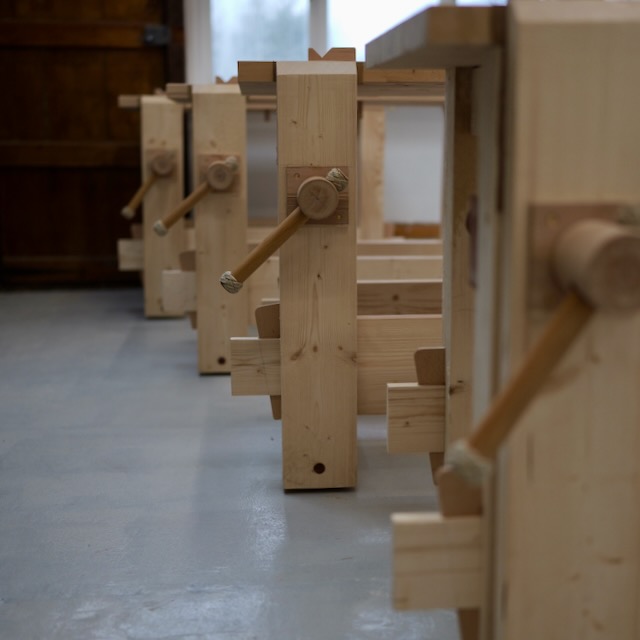
3D model of a woodworking bench featuring a sturdy structure, a slatted lower shelf, and a crank mechanism for clamping workpieces.

They’re available in six different sizes: three in metric, three in imperial. But they’re not just a straight conversion. We’ve designed the imperial and metric benches around the materials most commonly available in different regions and have worked out sensible sizes so that you don’t end up with something silly like a bench top that’s six feet six and forty seven sixty-fourths of an inch!

  • 1m/3.5′ – ideal for chairmaking, small and easy to store but rock solid
  • 1.5m/5′ – a good sized joinery bench but every piece is manageable when setting up or moving it around
  • 2m/7′ – a bench big enough for any furniture project but with a top that’s still moveable by a normal human being

These benches have been designed with five principles in mind:

  • Built from easily available materials with basic woodworking tools
  • Only very basic joinery skills required
  • Easy and quick to set up
  • Every component must be light enough to move easily around your workspace
  • Rock solid; the fact that it packs down quickly mustn’t make it flimsy in use

The plans include complete cutting lists for all pieces, a suggested tool list and instructions. Eventually there will be YouTube videos. We’ve finished the introductory video and working on the next 4!

Workbench vice screws

A collection of wooden parts for a workbench vice, including a threaded screw, blocks, a threaded rod, and several small components, placed on a wooden work surface.

To help you along with your workbench build we’ve started selling the vice screws that we use on our benches. You can use a metal vice attached to the top or you can get a wooden vice screw from us.


St.Alban’s Upholstery School & Studio
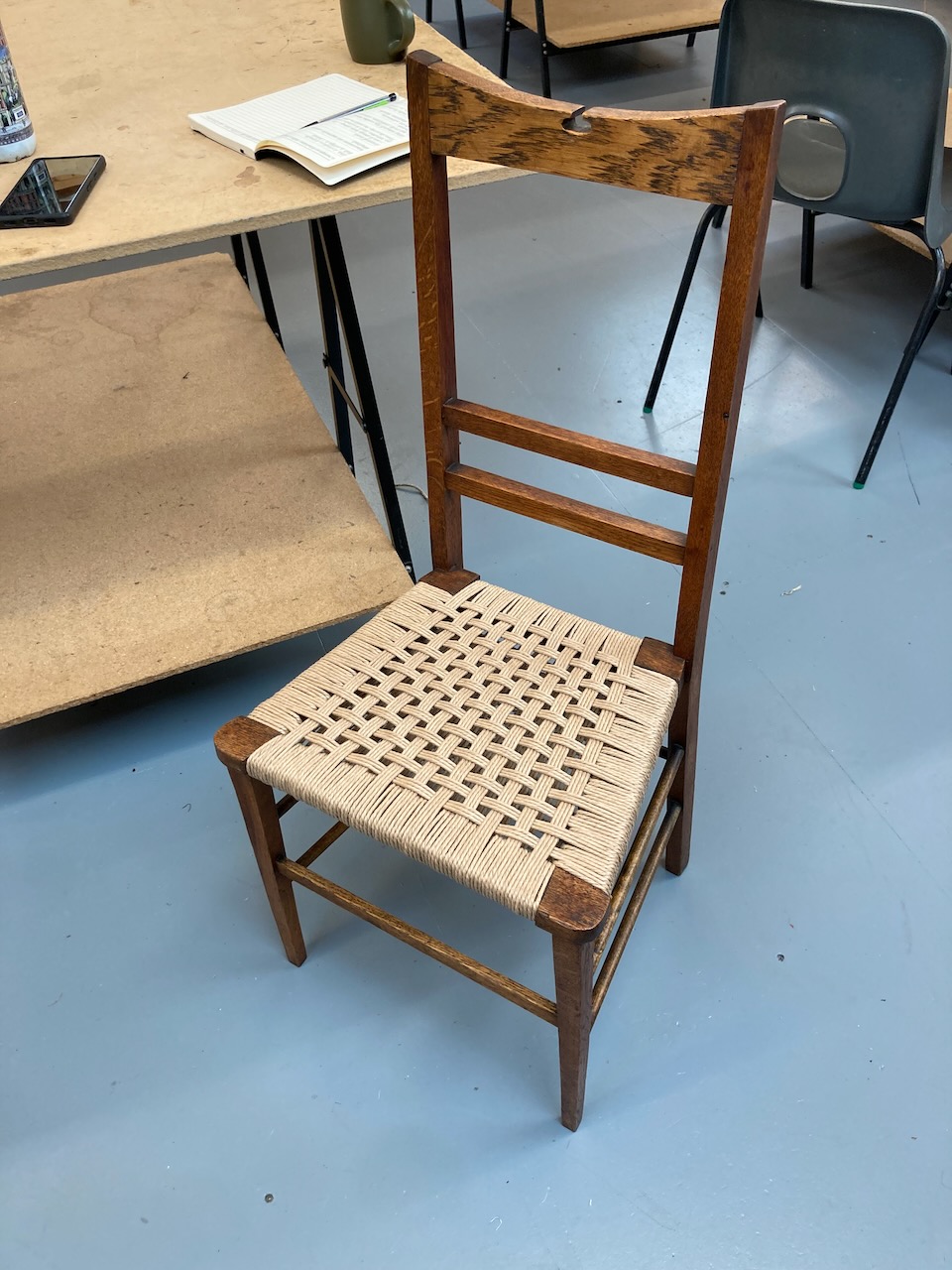
A woven Danish cord seat on a wooden chair with a rustic finish, placed in a workshop environment with tables and materials in the background.

In September we taught a one day workshop in seat weaving with Danish cord and seagrass at the wonderful St.Albans Upholstery School. Participants brought their own chairs that needed a new seat and we worked out a solution for each chair. At the end of the day 8 new seat weavers went home with a completed chair.

It was a really challenging and worthwhile day. Usually we’re teaching people to weave the same seat with only a slight variation in pattern so seeing 8 different designs go home at the end of the day was very satisfying.

Nothing says you’ve done a good job like being invited back and we’re delighted to be delivering another course in January. Keep an eye on their website for details.

If you don’t know St.Alban’s Upholstery School and Studio I hesitate to point you towards their website. 5 minutes of looking at their gallery can prompt either a career change or radical rethink of your interior designs – you have been warned!


A splash of colour
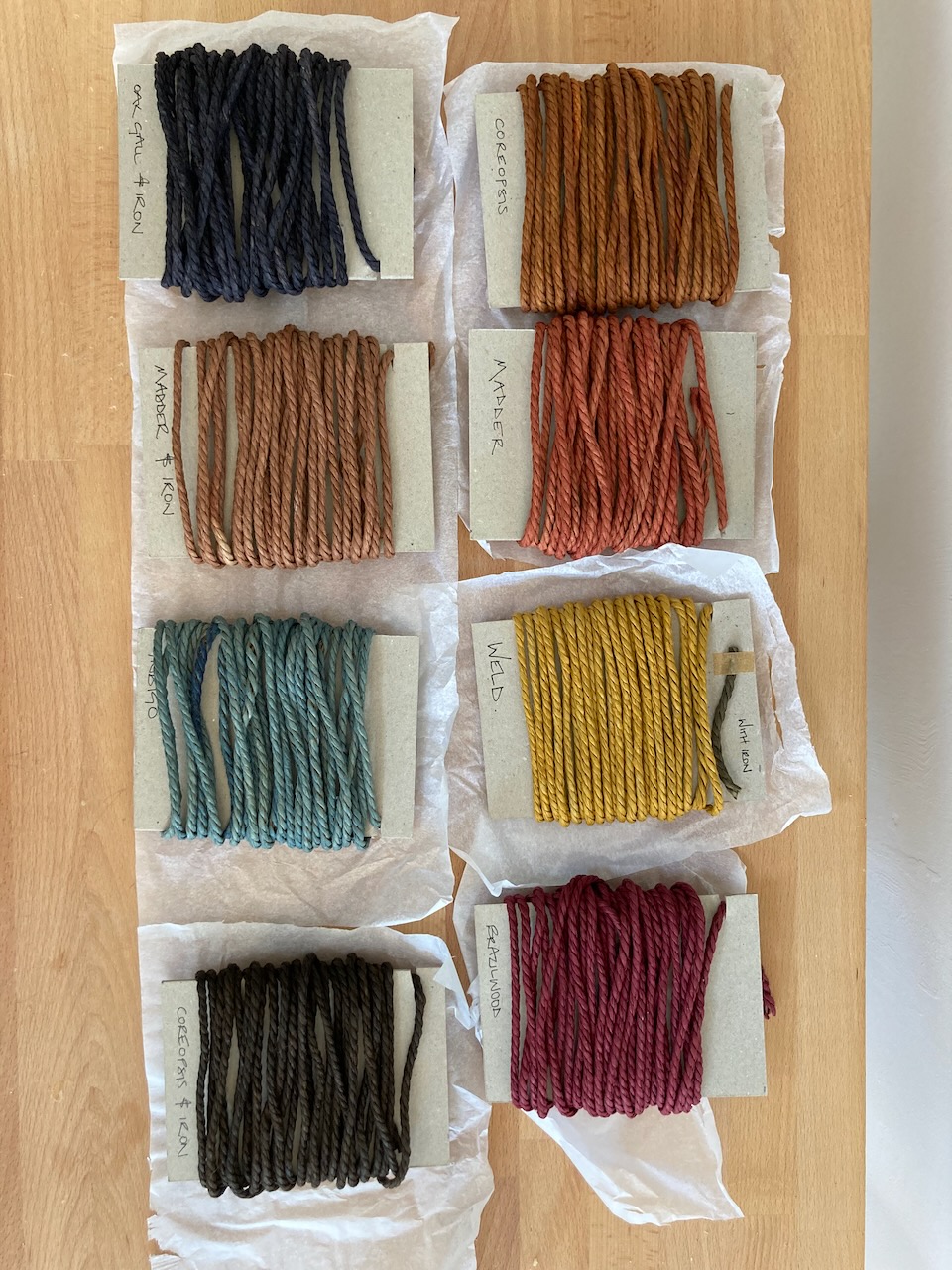
An array of dyed Danish cord in various colors, neatly arranged on cardboard tags on a light wooden surface.

Our amazingly talented friend Jacqui Symons at Slow Lane Studio sent us some dyed Danish cord earlier in the year. We’ve been itching to weave it into a seat and finally found the time and the right chair.
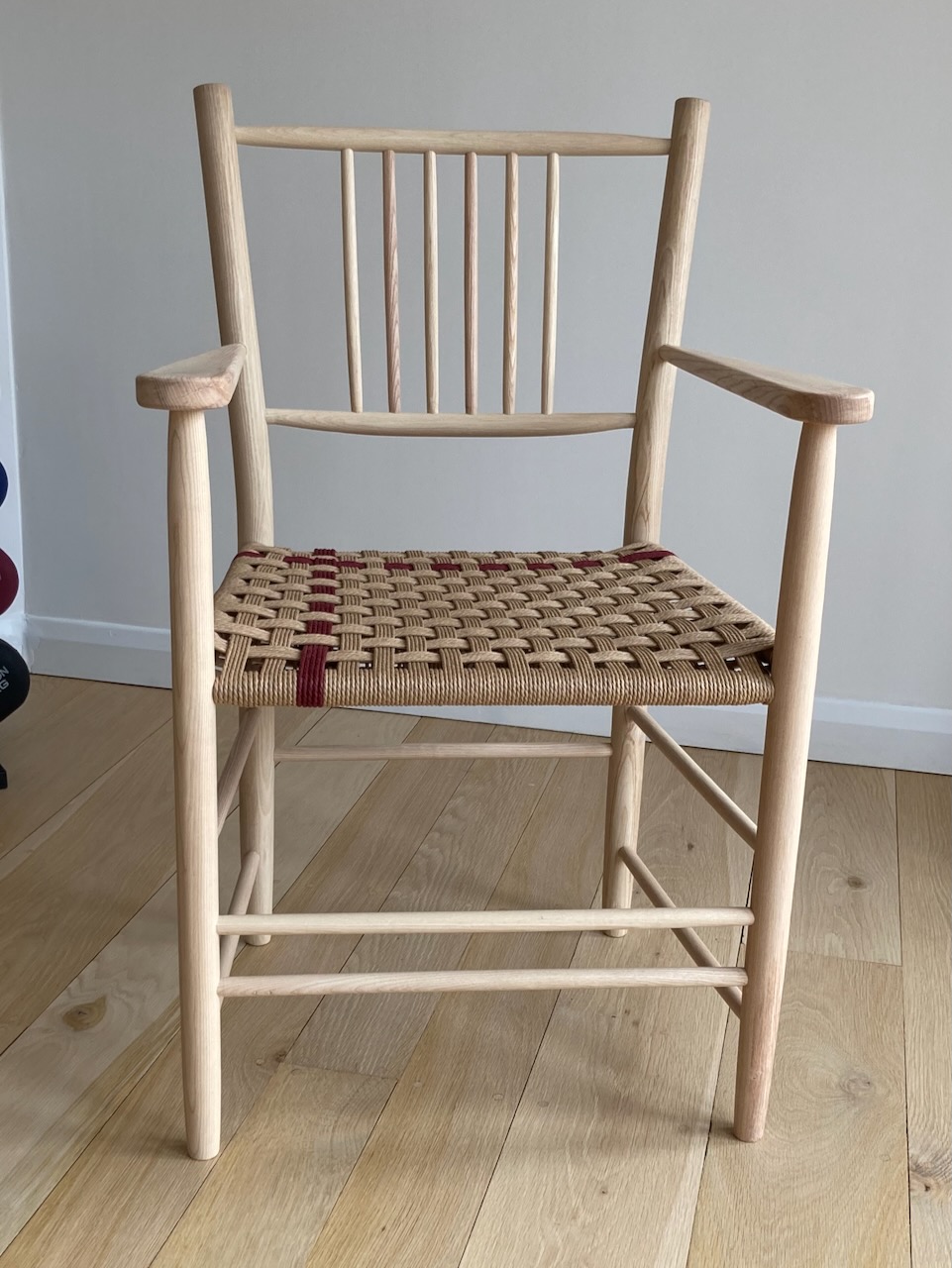
A handcrafted armchair featuring a woven seat made of natural Danish cord, with a light wood frame and vertical slats on the backrest.

This arm chair uses cord dyed with Brazilwood. The photos don’t really do it justice. It’s an incredibly rich and deep colour and gives the light ash and muted Danish cord chair a new dimension.

A book titled 'From Plant to Print' by Jacqui Symons, displayed on a wooden surface, featuring images of natural dyes and pigments for printmaking.

We’ve got several more samples to try before we work out what to do next. It’s unlikely that it will feature on a course soon because we need to test it for colour transfer (sitting on it in light coloured trousers!) before we can be sure it’s a complete success. But for the time being we’re delighted!

Jacqui published a book recently on natural dyes and pigments. It’s the culmination of years of testing and researching and is beautifully illustrated. Available direct from her website.


Hard wax
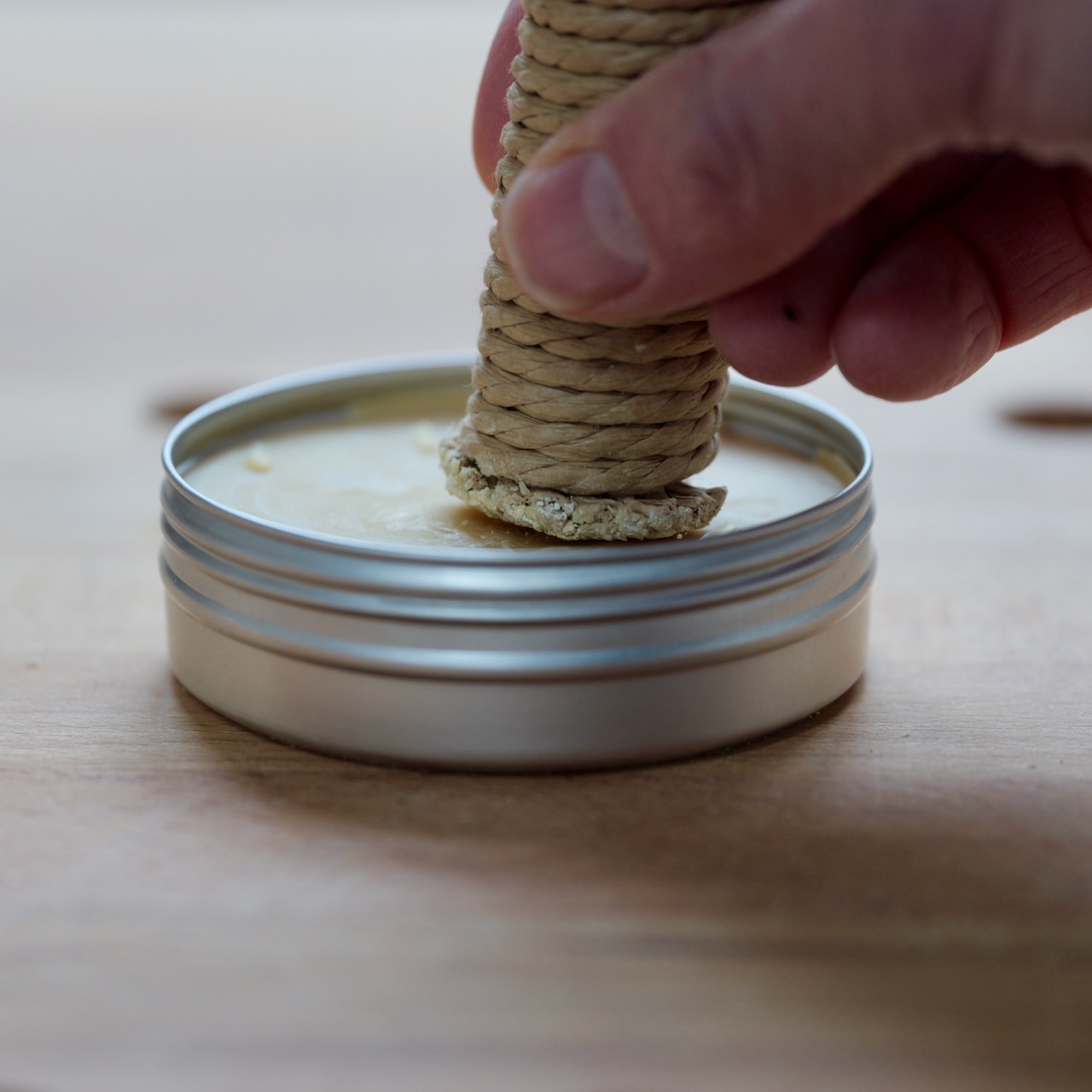
A hand pressing a corded tool into a tin of finishing wax, with a wooden surface in the background.

On every course we get asked about finishes: oil or varnish, shellac or wax? We’re always very hesitant to recommend finishes to course participants because we’ve been so unhappy with what’s available. Ideally a finish should be easy to apply, hard-wearing, non-colouring and easy to repair if it gets damaged.

This is called a unicorn finish.

We’ve used lots of different finishes over the years and have had acceptable results from shellac and Osmo Polyx Raw, mixed results from oils and varnishes and disappointing results from waxes.

As a generalisation the longer a finish lasts the harder or more time-consuming it is to apply. Lots of oils and varnishes give too much orange or yellow colour to the wood. Soft waxes are easy to apply but give little long-term protection to the wood.

So several years ago we started experimenting with our own wax recipe. Most furniture waxes are soft and contain beeswax or a soft microcrystalline wax. Most use a petroleum based solvent. Most are easy to apply but offer very little longevity or protection.

But there is an alternative. Automotive and marine wax manufacturers use Carnauba wax, a natural, plant-based wax that has a higher melting point than beeswax but is much harder and longer lasting. It’s what professional ‘detailers’ use to make supercars look shiny.

We started experimenting with a blend of Carnauba wax, beeswax and citrus oil to create a wax that is definitely a little bit harder to apply than traditional soft waxes but offers much better protection and longevity.

We’ve been using it on all of our workshop and household furniture for several years and have been tweaking the formula each time. Now we’re happy with the results.

It’s applied with either a burnisher or a grey pad, left for a few minutes and then buffed off.
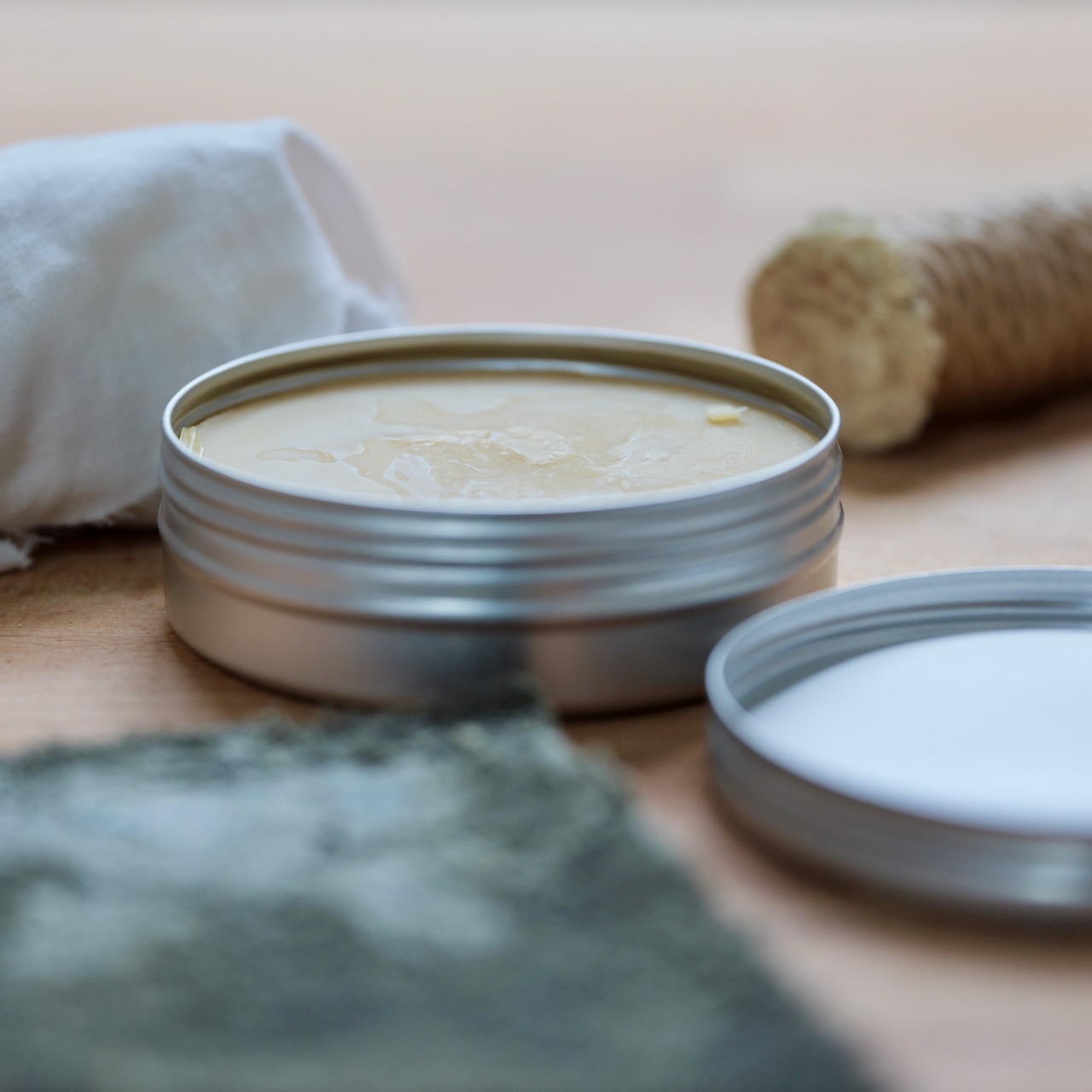
A tin of homemade hard finishing wax with a partially open lid, placed on a wooden surface alongside a cloth and a roll of twine.

We use it on its own or over other finishes if required. It gives a soft, subtle sheen and leaves the wood feeling smooth and protected.

The huge advantage of a finish like this is that it can be applied in one coat and the piece of furniture can be handled straight away. You don’t need to leave it to dry overnight and if it starts to wear you can easily top it up without having to sand it back.

We’ve got to work out the packaging details and then we’ll be putting it up on website: look for it in the new year.


As always, if you’re interested in coming on a course and you want to find out more please give us a ring (07778 397328) or drop us an email. You can book all of our courses through the links on our website. If our dates aren’t perfect for you or you want to book for a group give us a call; we can usually work something out. Don’t forget course fees include all materials, lunch and refreshments each day.

Enjoy your time in the workshop.

StJohn & Bryony
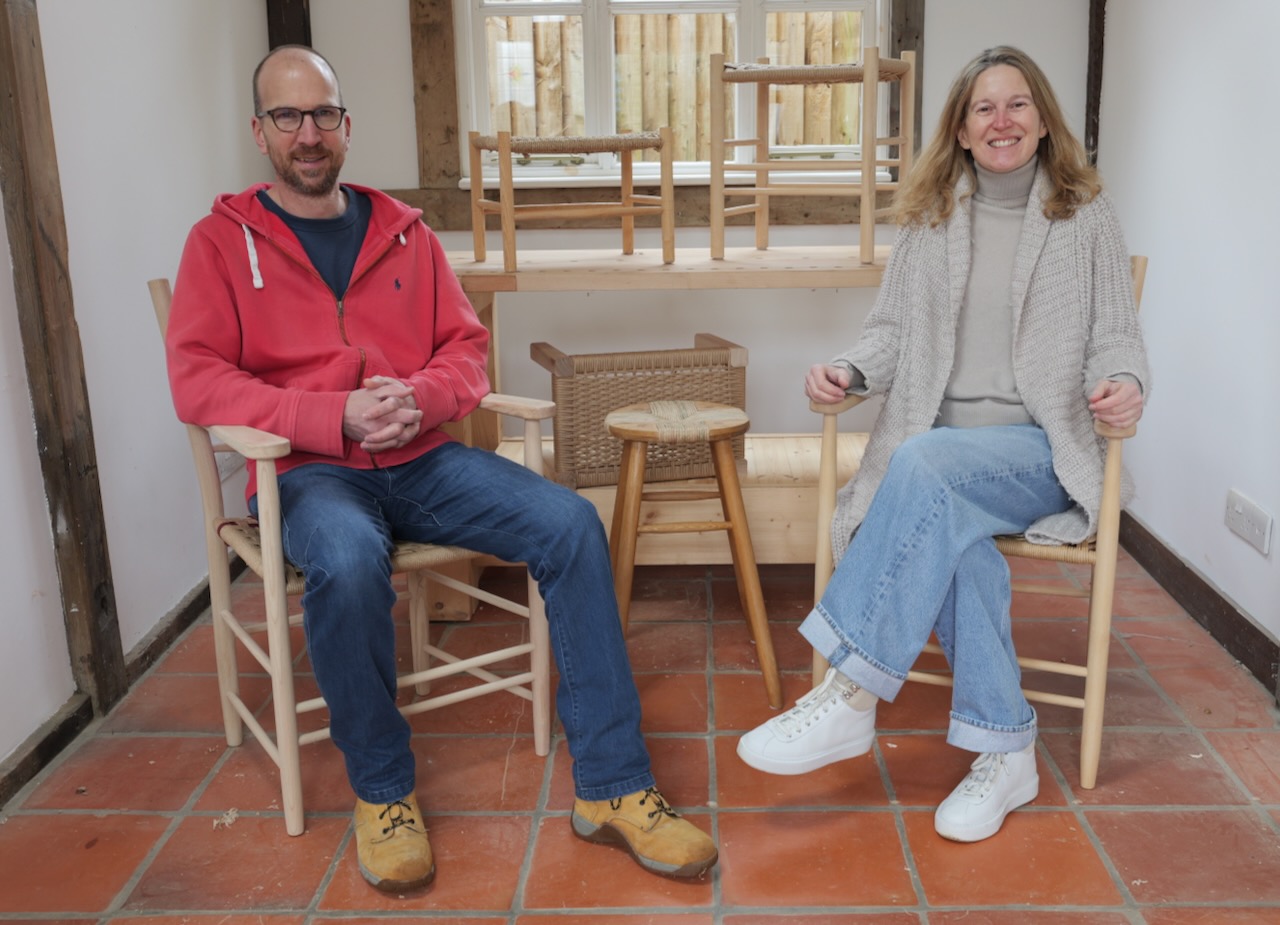
Two individuals seated in a workshop, smiling at the camera. One wears a red hoodie and the other a beige sweater. In the background, various wooden chairs and a small table are visible.
The Quiet Workshop Newsletter: Workbench Plans!

The Quiet Workshop Newsletter: Workbench Plans!

Technical drawing of a workbench design featuring labeled components and measurements.

They’re here: Workbench plans!

By popular request (no really!) we’re delighted to announce the publication of our workbench plans.

3D model of a workbench with a sturdy design, featuring a flat surface and two vices on each side.

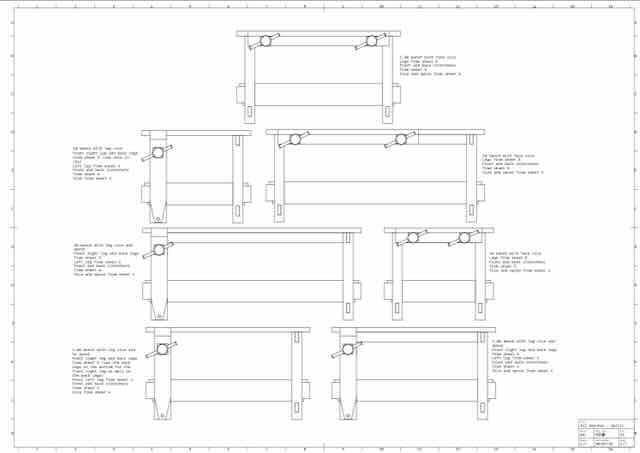
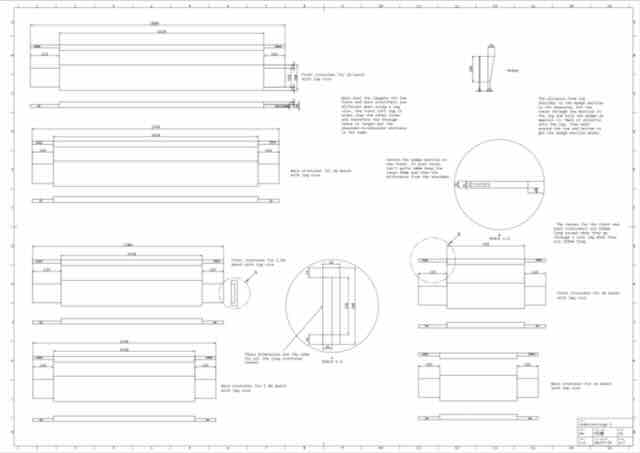
We’ve drawn plans to build our rock solid, take-apart bench in 1m, 1.5m, 2m, 3 1/2′, 5′ and 7′ lengths with a choice of two different vices. You have the choice of metric or imperial measurements. They’re not just conversions of the measurements we usually work in, they’re designed from the ground up in each system. They’re available in our new shop here.

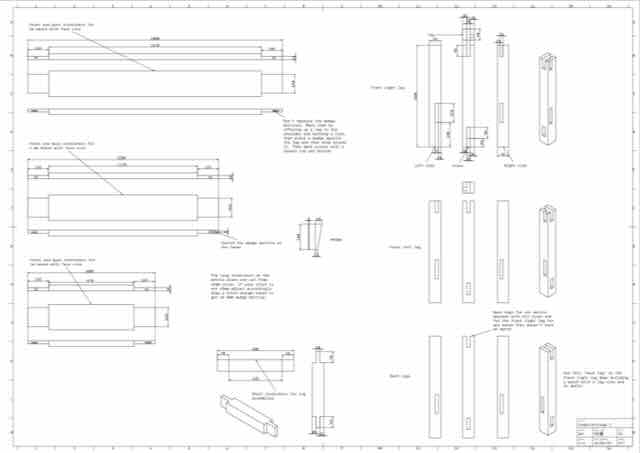
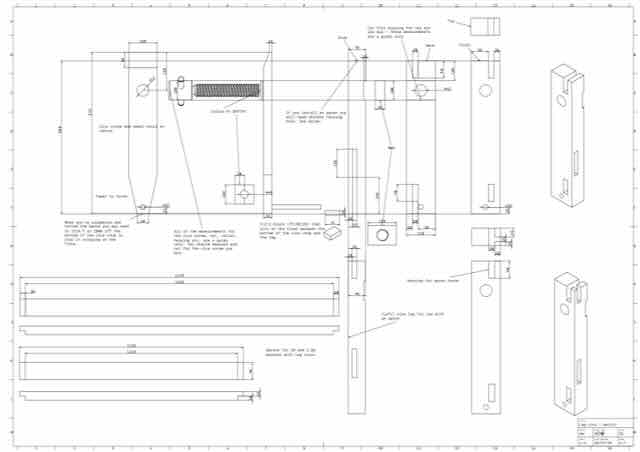
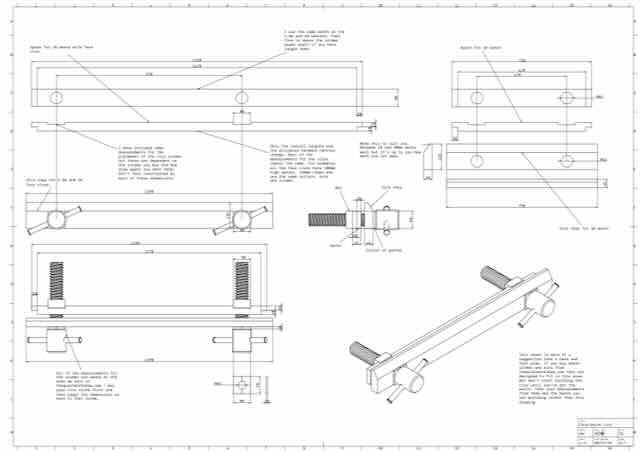
Each set of plans includes 6 A1 drawings, an A4 drawing and 11 pages of instructions. We’re now working on a series of videos for YouTube to support builders with the plans. The plans are currently available for download. Paper plans will be available very soon.

From the introduction to the instructions:

“Our garage used to be a coffin makers’ workshop; in it there is a 10’ bench that is older than any living woodworker. It is built from whatever material didn’t make the grade for coffins and is hammered together with the random selection of nails they had to hand.

Despite the apparent lack of joinery, low grade materials and optimistic approach to bracing it survived life in a busy professional workshop.

Your bench will be better. It will have better joinery, more carefully selected materials and a better design. And you will put more time and thought into building it. So there’s plenty of room for error. When building it live by the phrase “It’s a workbench, not a piano.” When you’ve finished it don’t point out the errors to friends and family and soon you’ll forget where they are. If you get tear-out when you plane it: don’t worry. If you pull out a lump as you drill a through-tenon: never mind. These scars will blend with the clamp marks, the saw cuts and the glue spots that will appear the moment you start using it. Remember: “It’s a workbench, not a piano.”

The design of this bench has been evolving for many years. We run chairmaking workshops and so have built a lot of benches. With each generation they get a little bit better and this is the result.

These benches are designed for woodworkers who have a small amount of space and time to practice their craft. Space that is probably shared with bicycles, a lawn mower and a jet wash. They need a rock solid platform for planing, sawing and chiselling but have to pack it up and share it with the rest of their lives.”


Don’t forget we’re taking part in Cambridge Open Studios this month so if you want to come and have a look round we’re here between 10am and 5pm on the 12th&13th and 26th&27th July.

As always, if you’re interested in coming on a course and you want to find out more please give us a ring (07778 397328) or drop us an email. You can book all of our courses through the links on our website. If our dates aren’t perfect for you or you want to book for a group give us a call; we can usually work something out.

Enjoy your time in the workshop.

StJohn & Bryony

Two people sitting on a workbench surrounded by woodworking tools, with plans displayed in the background.
The Quiet Workshop Summer Newsletter

The Quiet Workshop Summer Newsletter

Coming soon: Workbench plans!

On every course and at every show we are asked about our workbenches. We’ve put a lot of thought and a lot of work into them over more than 10 years. Our most recent bench is at least the eighth iteration of a design that is always almost perfect! Just one more tweak…

So it’s time to stop procrastinating and publish the plans. We’re making these available in six different sizes: three in metric, three in imperial, all in the same set of plans. But they’re not just a straight conversion. We’ve designed the imperial and metric benches around the materials most commonly available in different regions and have worked out sensible sizes so that you don’t end up with something silly like a bench top that’s six feet six and forty seven sixty-fourths of an inch!

  • 1m/3.5′ – ideal for chairmaking, small and easy to store but rock solid
  • 1.5m/5′ – a good sized joinery bench but every piece is manageable when setting up or moving it around
  • 2m/7′ – a bench big enough for any furniture project but with a top that’s still moveable by a normal human being

These benches have been designed with five principles in mind:

  • Built from easily available materials with basic woodworking tools
  • Only very basic joinery skills required
  • Easy and quick to set up
  • Every component must be light enough to move easily around your workspace
  • Rock solid; the fact that it packs down quickly mustn’t make it flimsy in use

The plans will include complete cutting lists for all pieces, a suggested tool list and instructions. Eventually there will be YouTube videos but don’t hold your breath…

We’re setting up a shop page on our website: thequietworkshop.com and when that’s live we’ll send a very short newsletter round. Probably the end of June.

If you haven’t been on one of our courses yet but would like to see one in action then come along to…


Cambridge Open Studios

Every July, for the last 51 years, artists and craftspeople in and around Cambridge throw open their doors and invite you into their studios. It’s an incredible celebration of the creativity of the people in the area. 223 studios and 12 larger venues will be open over the four weekends of July. We’ll be taking part on the 1st, 2nd and 4th weekends: 5-6th, 12-13th & 26-27th.

We’re on page 62 of the guide. We’re listed as number 144 under my name: StJohn Starkie. The number has nothing to do with our workshop address which is 41 High Street, Great Wilbraham! We look forward to seeing you in July.


Shows this year

We had a lovely time at Living Crafts Fair at Hatfield House. If you haven’t been before we thoroughly recommend it; we’ll definitely be back next year. If you missed us there you can catch us at one of the following:

If you think there’s a craft show within an hour’s drive of Cambridge that we should attend please drop us a line. We’re always grateful for new opportunities.


Stools

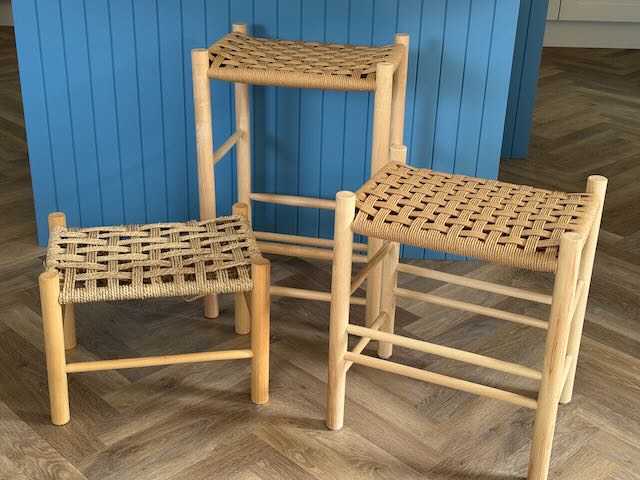
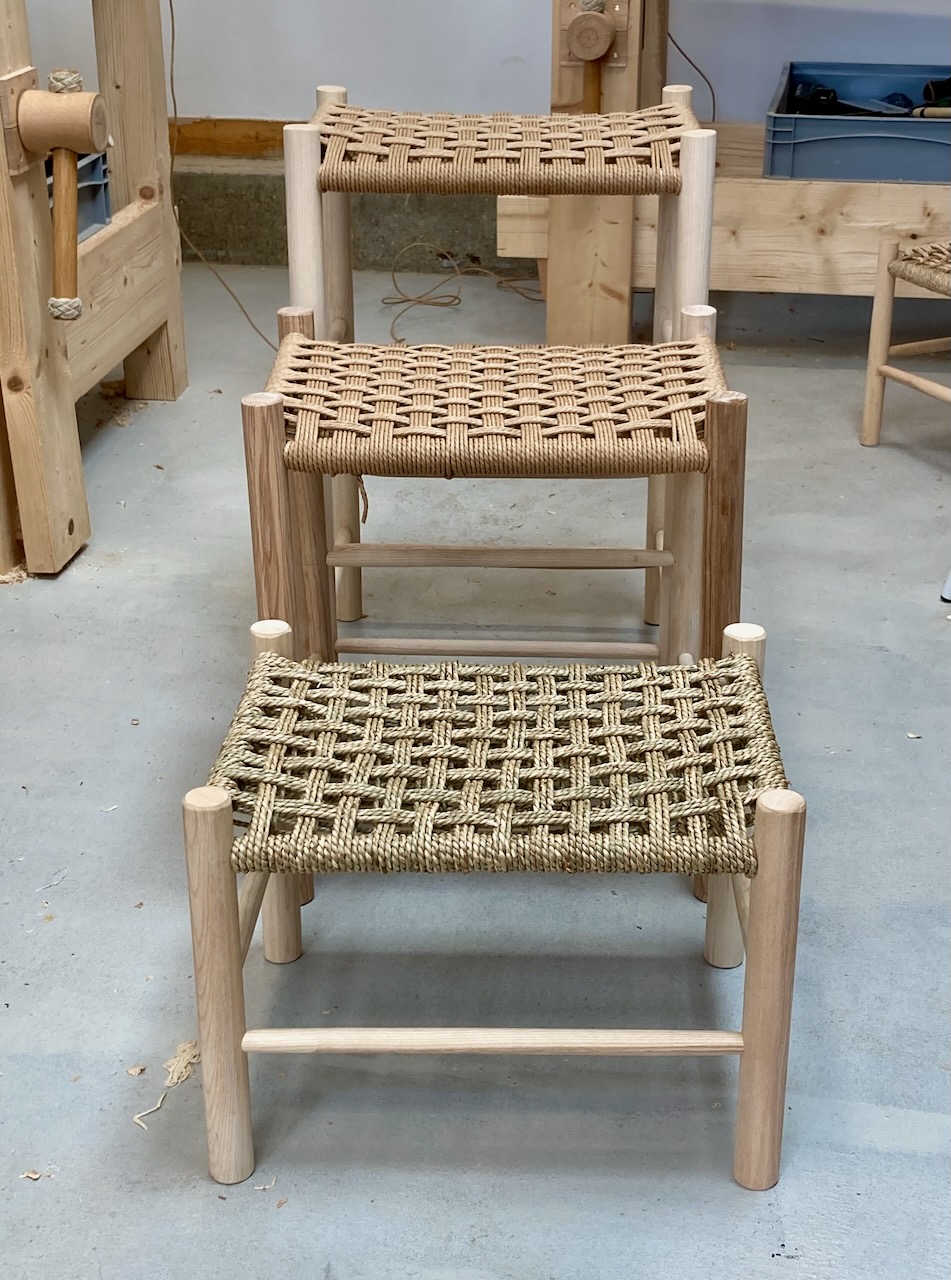
The simple stool courses are our most popular. This two day course started with the little one rung milking stool but more and more people are asking to build them bigger. When you book this course on craftcourses.com it will default to the smallest stool. If you want to build a stool that works well under a dining table or as a bedside table choose the option to add timber for a 50cm stool. If you want it to work well at a kitchen counter select the option to add timber for a 70cm stool. These are nominal heights for the leg blanks. The seats are actually at about 46 and 64cm respectively and have been designed around long-standing conventions that suit the majority of people and living spaces. But you can always make them shorter!

Adding rungs means a bit more work rounding legs, drilling mortises and cutting tenons so it’s a slightly longer first day but you get a beautiful piece of furniture that fits your home.


As always, if you’re interested in coming on a course and you want to find out more please give us a ring (07778 397328) or drop us an email. You can book all of our courses through the links on our website. If our dates aren’t perfect for you or you want to book for a group give us a call; we can usually work something out.

Enjoy your time in the workshop.

StJohn & Bryony

The Quiet Workshop Spring Newsletter

The Quiet Workshop Spring Newsletter

There was so much space before we put the benches in!

Come and visit our workshops in July!

We finished the expansion of the workshops over the winter and are now running all of our courses with six participants. If you don’t have the chance to come on a course why not visit us one weekend in July? This year we’re taking part in Cambridge Open Studios and invite you to come in and see what we’re doing. There might even be biscuits…

COS has been running for over 50 years and is an annual opportunity to meet artists and craftspeople in their studios. This will be our first year opening our doors for this event and we’re really looking forward to it.

There are several local artists in the Wilbrahams and Fulbourn who will also be taking part and they’re very much worth a visit so if you’re free for a weekend in July come and see us.

We’ll be open from 10-5 on both Saturday and Sunday of the 5/6th, 12/13th and 26/27th. We’re running a course on the 19th and 20th so we won’t be open for visitors then but look forward to seeing you on any other weekend in July.


Course Dates: 2025

Loads more courses and more spaces on each course. Our course schedule for 2025 is now on our website. There might be a couple of tiny changes but if you book a course we won’t change that date.


Shows this year

We’ve had a couple of changes to our show calendar and are delighted to have been accepted to Living Crafts Festival at Hatfield House in Hertfordshire. If you haven’t been before it’s worth the trip; it’s one of the biggest and most diverse craft shows we’ve been to and has an unparalleled range of workshops and activities.

If you think there’s a craft show within an hour’s drive of Cambridge that we should attend please drop us a line. We’re always grateful for new opportunities.


Books

We often get asked for book recommendations. Whilst there are lots of books about building Windsor Chairs there are fewer that are great for ladder backs, post and rung and rush-seated chairs. The two I got started with are often available used and are both an excellent introduction to the craft. They’re by no means exhaustive though. When describing the process of building the legs of a chair one of the authors writes, “Turn or otherwise round the legs…” which leaves plenty to the imagination. A little face-to-face instructions won’t go amiss!

Jack Hill’s book is often very reasonably priced but copies of Langsner’s book are sometimes eye-wateringly expensive. Setting up a search on Abebooksco.uk is worth doing.


What’s for tea?

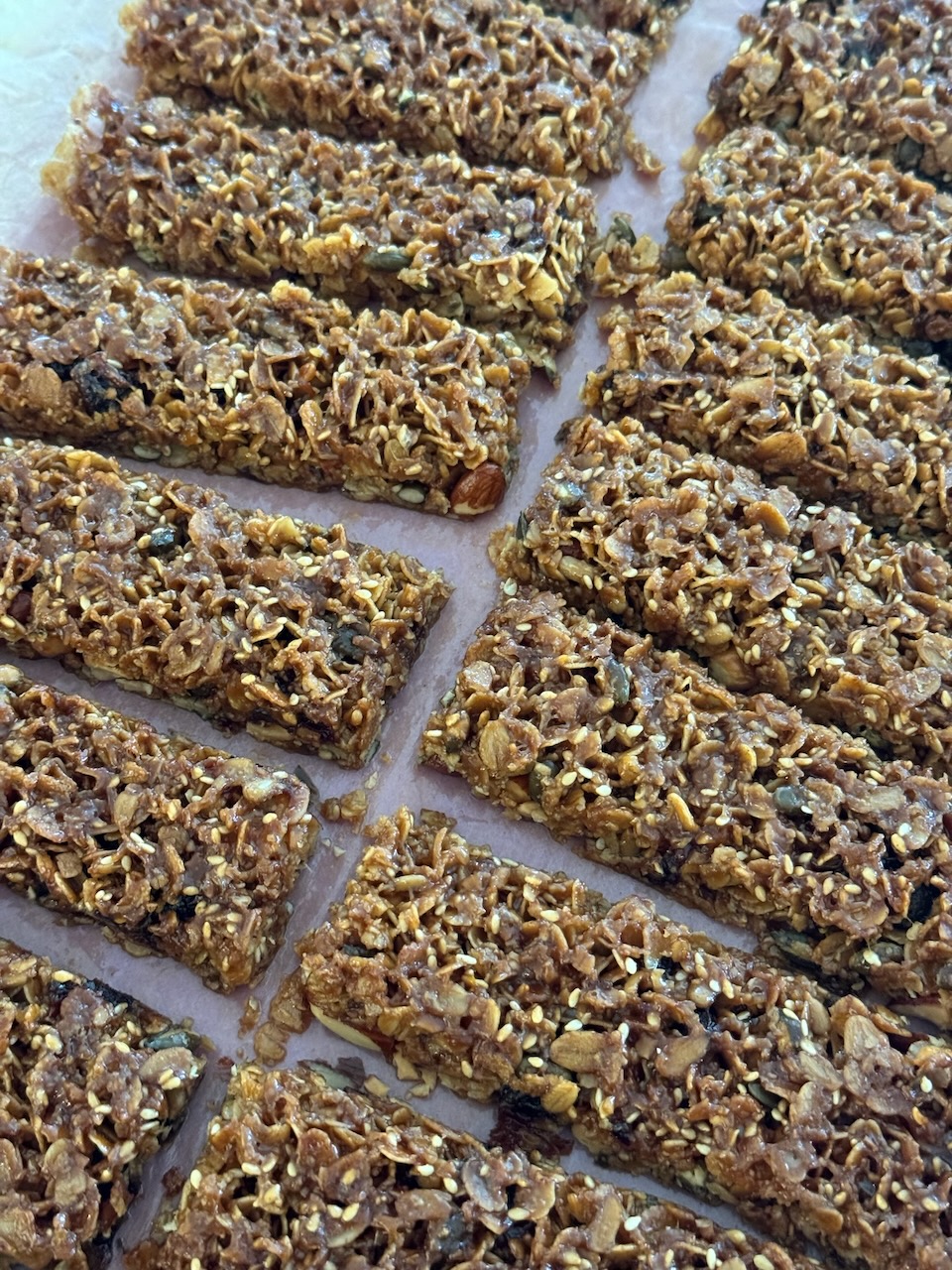
All of the food on our courses is hand-made by Bryony. She trained at Le Cordon Bleu as a patisserie chef so her standards are rather high!


As always, if you’re interested in coming on a course please give us a ring (07778 397328) or drop us an email. You can book all of our courses through the links on our website.

Enjoy your time in the workshop.

StJohn & Bryony
The Quiet Workshop Autumn Newsletter

The Quiet Workshop Autumn Newsletter

End of the season

We’ve got two courses left this season; it draws to a close at the end of October. After that it gets a bit chilly in the workshop!

We’ve had a fantastic year so far: our first in our new workshops. Thank you so much to everyone who has attended. We’ve enjoyed every minute of it (except for that bit where StJohn cracked a tenon in a student’s stool! Don’t worry… all fixed.)


Course Dates: 2025

Loads more courses and more spaces on each course. Our course schedule for 2025 is now on our website. There might be a couple of tiny changes but if you book a course we won’t change that date.

Last year our March and April courses booked up over Christmas but we had spaces later in the summer.


Shows next year

We’ve got one show left this year: the London International Woodworking Fair on the 1st and 2nd November. It’s going to be a good one; we hope to see you there.

We exhibit at craft and country shows about once a month during the Spring and Summer. It’s a lovely way of meeting potential new chairmakers! If you’d like to have a chat about our courses and see some of the chairs, stools and benches you can make come along to a show next year and we can meet.

We don’t have exact dates for next year’s shows yet but this is our rough plan:

We look forward to seeing you there!

If you think there’s a craft show within an hour’s drive of Cambridge that we should attend please drop us a line. We’re always grateful for new opportunities.


Tools

We’ve finally managed to put up a tool list on the website!

It’s a work in progress but it’s most of the way there. If you’ve been on a course with us and spot something that’s missing please let us know.

On which note…

Christmas List

It’s almost acceptable to talk about Christmas in October so we’re taking the opportunity to publish The Quiet Workshop Christmas List 2024. This might become an annual event! Five gifts for the chair maker in your life at a range of prices:

Under £10

Olfa Slimline knife. Our favourite marking knife for when a pencil isn’t precise enough. Also good for any number of other workshop tasks and as the blades are snap-off it doesn’t need sharpening.

£10 to £20

Folding rule with depth gauge. StJohn has been carrying one of these for years. It has survived the washing machine but we don’t recommend a fast spin cycle. Over the winter we’re replacing all of the tape measures in the workshop with these because they’re more accurate and easier to use.

£20 to £50

Ray Iles Rounding Plane. Ridiculously satisfying.

£50 to £100

Diamond sharpening stone. We sharpen with oil stones in the workshop but if we were starting from scratch we’d buy a double sided diamond stone and never have to flatten it.

Over £100

The Quiet Workshop Bench screw and nut: £150. We make these and you can order them directly from us. Everyone who takes a class at our workshop knows how quick these are to use and how tightly they hold. We have about ten left in stock but won’t be making any more until after Christmas. If you’re planning a workbench build this is a great place to start.


What’s for lunch?

Since this was so popular last time here are some pictures of Bryony’s gorgeous food!


As always, if you’re interested in coming on a course please give us a ring (07778 397328) or drop us an email. You can book all of our courses through craftcourses.com

Enjoy your time in the workshop.

StJohn & Bryony
The Quiet Workshop Summer Newsletter

The Quiet Workshop Summer Newsletter

More courses; more shows

Despite some miserable weather it’s been an absolutely lovely summer in the workshop. We’ve run almost a dozen courses already this year and met many wonderful chair makers. Thank you to everyone who has attended; it’s been an absolute pleasure.

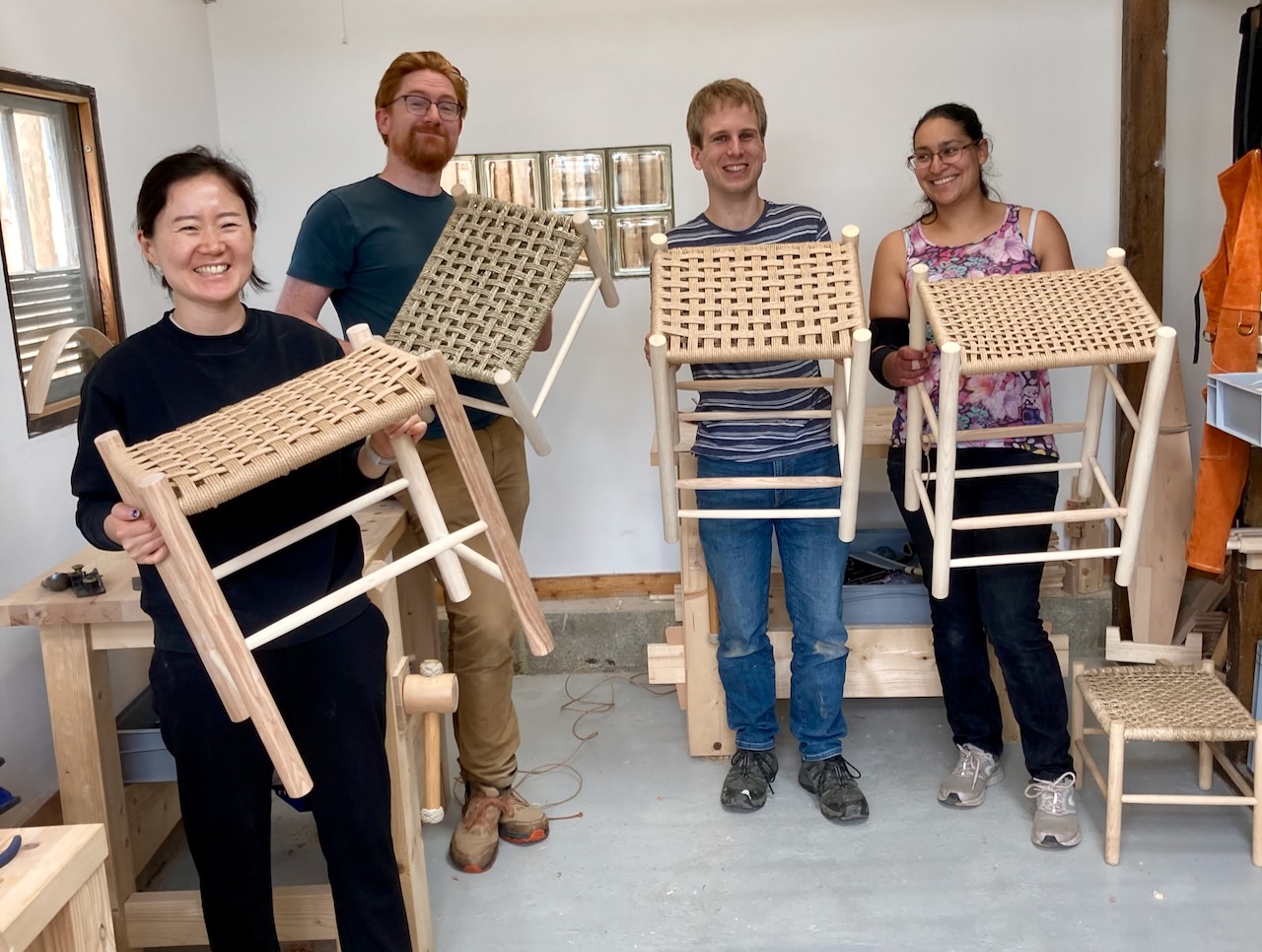
Our stool making courses have been sold out so we’ve added some more later in the year. Chairmaking courses are more of a commitment but we’ve been really happy with the response and have seen some beautiful chairs leave the workshop, most built by absolute beginners.


Shows

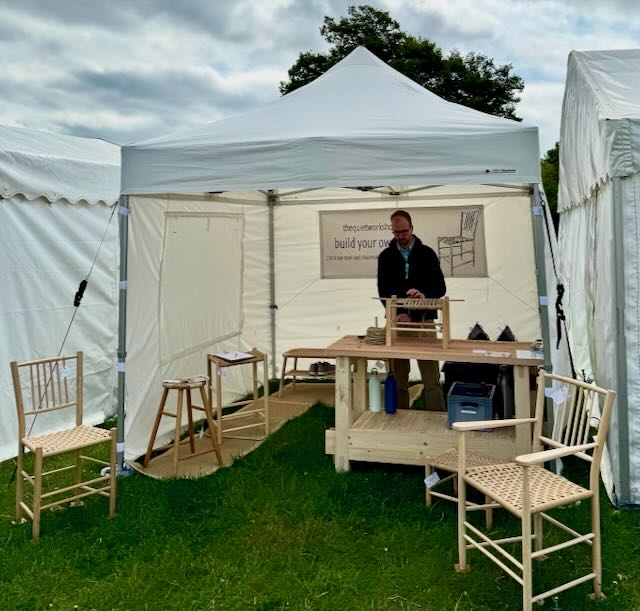
We exhibit and demonstrate at craft and country shows during the summer. It’s a lovely way of meeting potential new chairmakers! If you’d like to have a chat about our courses and see some of the chairs, stools and benches you can make come along to a show and we can meet:

We look forward to seeing you there!


How do you get that shine?

One of the most frequently asked questions on the course is about how we finish our furniture. Is it oil, lacquer, varnish? How do we apply it? Brush, roller, sponge, spray? How far do you sand? 240? 400? Higher?

The truth is: we hate sanding. And we’re not all that keen on smelly finishes and oil soaked rags. When we’re making a commissioned piece for sale we pull out all the stops but if we’re making a piece for us or a friend we have a very simple formula:

  • Sand with 80 grit
  • Burnish and wax
  • Polish

That’s it!

The key to this is a burnisher made from the offcuts of seagrass or Danish cord. These are based on the traditional French Polissoir which was just a bunch of straw wrapped up tightly with some more straw. We rub the burnisher in a hard wax that we make ourselves and then rub it hard on the sanded or planed timber. Rather than abrading the surface it burnishes it creating a smooth and silky surface. Then we just rub off any excess wax and call it done. It leaves a lovely smooth, soft sheen.

If it starts to look dirty or dull in a few years then we wash it with warm water and burnish it again.


Building a tall stool

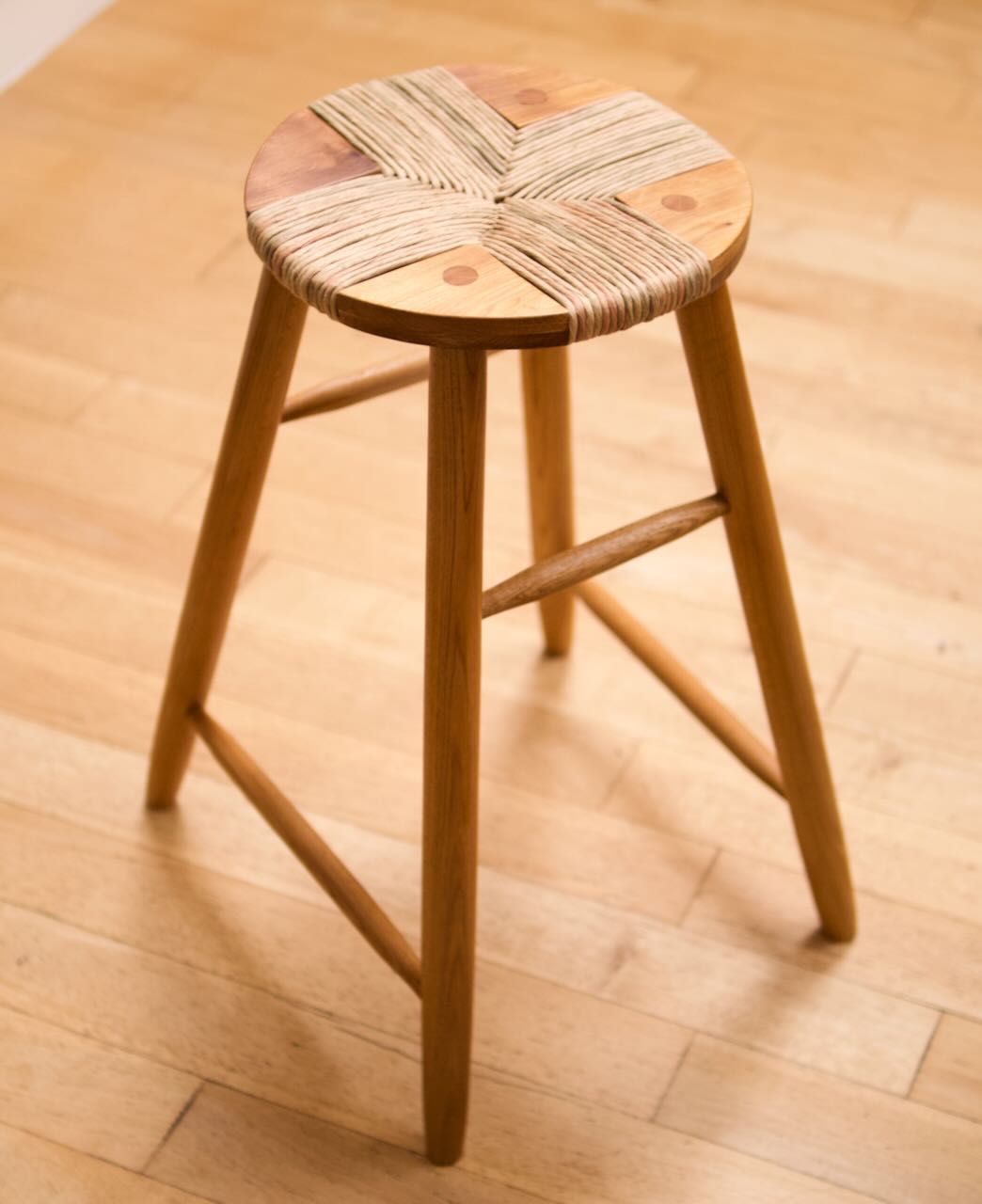
We get a lot of requests to build a tall stool in the style of the simple stool. It’s a huge amount of work for a two day course so we’re offering an option to extend a two day course by one day (before the scheduled course weekend) to do all of the stock prep needed for a tall stall.

On craftcourses.com we’ve added these extension days as separate courses. You will need to book the extra day for the course you’re booking.


What’s for lunch?

Since this was so popular last time here are some pictures of Bryony’s gorgeous food!


As always, if you’re interested in coming on a course please give us a ring (07778 397328) or drop us an email. You can book all of our courses through craftcourses.com

Enjoy the better weather,

StJohn & Bryony

Correction: The Quiet Workshop Spring Newsletter

Correction: The Quiet Workshop Spring Newsletter

Apologies

In our recent newsletter we listed the Eadonstone Craft Fair on the 5th May. It is actually on the 4th May. Sorry for any confusion!

Thank you for a great start to the year

We’ve been incredibly busy here at The Quiet Workshop but all of that hard work is now being rewarded. We’ve run four workshops in three different designs at our new workshops so far this year and have lots of bookings going into the summer. Thank you for your support.

We had a lovely bunch of stool makers last weekend who all made beautiful pieces. It’s been a delightful start to the season and we’re really grateful for the reviews on craftcourses.com.

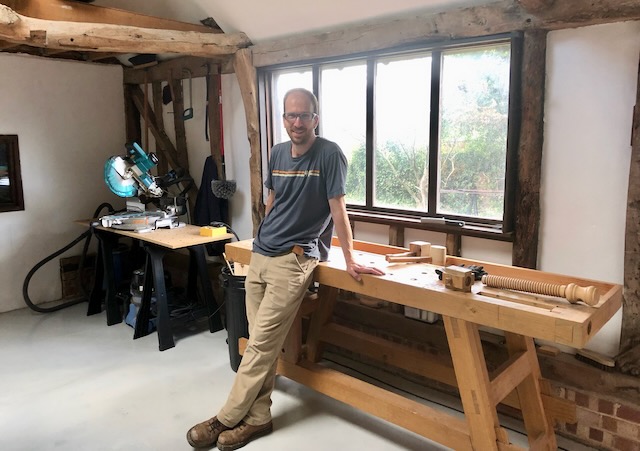
The new workbenches are in place and working well and the workshop looks lovely in the spring light. It’s a pleasure to be in there.

Several of our courses, particularly the round stool and simple stool have sold out so we’ve added a number of new dates, mostly at weekends. Have a look at craftcourses.com for the dates that suit you.


Shows

We exhibit and demonstrate at craft and country shows during the summer. It’s a lovely way of meeting potential new chairmakers! If you’d like to have a chat about our courses and see some of the chairs, stools and benches you can make come along to a show and we can meet:

We look forward to seeing you there!


Tools of the trade

We often get asked for tool lists. We try to keep the number of tools we use on courses as small and as affordable as possible so that when you go home and build your course chair a sibling it doesn’t cost you a fortune.

Some students want to bring their own tools. We’re very happy to accommodate that but we don’t have time to set them up and sharpen them during a course so only bring them if they’re in good condition. To give you an idea of the tools we use here is a photograph of the basic set for a simple stool or chair course. It doesn’t include all of the clamps and some of the less used tools.

If you want to bring some of your own tools but don’t know if they’re appropriate drop us an email and we can talk it through.


What’s for lunch?

The lovely reviews our students have posted seem to be as much about the food as the chairmaking!

When you come on a course you get elevenses, lunch and cake mid-afternoon. Bryony makes everything fresh each day and often the mid-morning cookies are still warm from the oven.

Last week we had our food hygiene inspection and all of the training, planning and preparation paid off with full marks!


As always, if you’re interested in coming on a course please give us a ring (07778 397328) or drop us an email.

Enjoy the spring,

StJohn & Bryony
The Quiet Workshop Spring Newsletter

The Quiet Workshop Spring Newsletter

Thank you for a great start to the year

We’ve been incredibly busy here at The Quiet Workshop but all of that hard work is now being rewarded. We’ve run four workshops in three different designs at our new workshops so far this year and have lots of bookings going into the summer. Thank you for your support.

We had a lovely bunch of stool makers last weekend who all made beautiful pieces. It’s been a delightful start to the season and we’re really grateful for the reviews on craftcourses.com.

The new workbenches are in place and working well and the workshop looks lovely in the spring light. It’s a pleasure to be in there.

Several of our courses, particularly the round stool and simple stool have sold out so we’ve added a number of new dates, mostly at weekends. Have a look at craftcourses.com for the dates that suit you.


Shows

We exhibit and demonstrate at craft and country shows during the summer. It’s a lovely way of meeting potential new chairmakers! If you’d like to have a chat about our courses and see some of the chairs, stools and benches you can make come along to a show and we can meet:

We look forward to seeing you there!


Tools of the trade

We often get asked for tool lists. We try to keep the number of tools we use on courses as small and as affordable as possible so that when you go home and build your course chair a sibling it doesn’t cost you a fortune.

Some students want to bring their own tools. We’re very happy to accommodate that but we don’t have time to set them up and sharpen them during a course so only bring them if they’re in good condition. To give you an idea of the tools we use here is a photograph of the basic set for a simple stool or chair course. It doesn’t include all of the clamps and some of the less used tools.

If you want to bring some of your own tools but don’t know if they’re appropriate drop us an email and we can talk it through.


What’s for lunch?

The lovely reviews our students have posted seem to be as much about the food as the chairmaking!

When you come on a course you get elevenses, lunch and cake mid-afternoon. Bryony makes everything fresh each day and often the mid-morning cookies are still warm from the oven.

Last week we had our food hygiene inspection and all of the training, planning and preparation paid off with full marks!


As always, if you’re interested in coming on a course please give us a ring (07778 397328) or drop us an email.

Enjoy the spring,

StJohn & Bryony

The Quiet Workshop Christmas Newsletter

The Quiet Workshop Christmas Newsletter

Happy Christmas!

Thank you so much for your response to our Autumn Newsletter. We’ve received a lot of interest in our courses and lots of bookings, particularly for the side chair class we focused on. However, the surprise success of our planned workshops has been the round stool. We only arranged two courses for it next year but due to demand we’re going to change one of the simple stool classes into a round stool course and add another date. It’s the focus of this edition’s Design Focus.


Bookings

We’re now using craftcourses.com for all of our bookings. This simplifies the whole process for you and us. It also means that you can give craftcourse.com vouchers as presents and use them for our courses.

If you book a course through our website you will be automatically transferred to craftcourses.com and you can then book a specific date.

Please don’t let that stop you getting in touch with us directly. If you don’t do online bookings give us a ring; we’re always happy to answer questions by email or phone (07778 397328).


In the workshop

In the run up to our courses in March we’re building lots of new jigs

Most of our courses need some kind of jig, either to hold timber or to shape it. Over the years we’ve simplified our building processes to use jigs that students can make at home without lots of machines.

At the moment we’ve got a batch of bending forms on the go. These are solid pieces of beech cut to just tighter than the radius of the back slats.

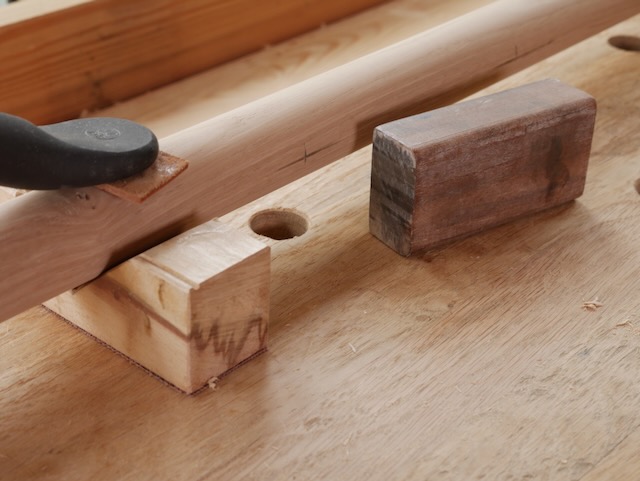
The simplest little jigs we use are the joiner’s blocks. Just a scrap of ash with two forty five degree saw cuts. But they’re essential in every one of our courses. You can make them grip better with a piece of sandpaper glued to the bottom and stop them bruising the timber with a bit of leather in the jaws. Make at least two at a time and make sure they’re exactly the same size so that your workpiece rests parallel to the bench top.


Design focus

In each newsletter we take a look in detail at each of the course chairs and stools we offer. These should give you a better understanding of how we build each piece on a course. In the autumn newsletter we looked at the side chair. This time let’s have a look at the round stool.

The round stool class takes three days.

Day 1: Unlike most of our other courses this stool requires some ‘flat work’; the top of the chair is made from four identical pieces that are glued up and shaped to a circle. Our first task is to cut the half lap joints for the frame at the top of the stool. We use a little magnetic jig to make this easier so don’t worry if you haven’t done this kind of thing before. We aim to have the frame glued up by lunchtime so that we can start rounding the legs.

These stools have long legs so there’s a bit of work to be done. You start with square section stock and plane the timber eight sided and then shave and scrape it round. This means that you’ll learn techniques that don’t require you to buy thousands of pounds of lathe and turning tools when you go home and want to build another chair!

Day 2: A busy day of rounding all the remaining legs and rungs. You’ll use a dowel maker and then put the tenons on with a tenon former. Once all of the parts are finished you drill the tenon holes in the top and then glue up the stool, admire your work and go home for the day.

Day 3: Seat weaving. This is the only course on which we teach the envelope weave, a key characteristic of this pretty little stool. There’s more to go wrong with this weave so we leave plenty of time so that if you make a mistake you can start again. It’s a lovely, gentle introduction to a traditional pattern that you can then use on other chairs. If you’re quick or you’ve done it before you might have this finished by lunchtime. But don’t worry; you’ve got all day.


Let them eat cake!

The question we get asked the most is “What’s for lunch?” Closely followed by “What’s for tea?”

When you come on a course with us all refreshments including elevenses, lunch and afternoon tea & cake are provided. Bryony, who trained at Le Cordon Bleu as a patisserie chef, provides a wonderful selection of treats to keep you going.


As always, if you’re interested in coming on a course please give us a ring (07778 397328) or drop us an email.

Enjoy the autumn,

StJohn & Bryony

The Quiet Workshop Autumn Newsletter

The Quiet Workshop Autumn Newsletter

Happy Autumn!

The summer has gone by in a whirlwind of shows, work on the buildings and chairmaking. The summer show season is now over; we’ve been blessed with the weather since Easter and managed to pack up at Hylands Park just before the rain came in a couple of weeks ago. It’s been lovely to meet so many of you this summer. Thanks to everyone who came and chatted to us at the shows.

A particular highlight for us was The Wonder of Wood Fair at Burwash Manor. The show is centred around children and we had lots of willing volunteers to build and weave this lovely little stool. We’ll definitely be back next year.

Although our scheduled courses don’t begin again until next March we’ve started teaching in Great Wilbraham already. We’ve had quite a bit of interest in private classes, particularly for seat weaving and we’re always happy to have guests into the workshop when we can. If you’re interested in private tuition please get in touch.

We’ll be at a few craft fairs in the run up to Christmas. At them you’ll be able to buy courses as presents or buy gift vouchers for courses. We haven’t booked all of the shows we’re going to yet so do check our Instagram for details.


Workshops

Roofing is finished on the workshops and the electricity is going in. We spent a week scraping the floor of the middle workshop and now have a smooth epoxy-painted concrete floor that we can actually sweep clean!

We’re ahead of our own timeline for the buildings and have already got customers in on private classes. The dedicated classroom workshop needs a bit more work before we can open it up prospective chair makers but we’re well on the way.


Reseating

We often get asked if we do reseating and despite the huge amount going on here we have managed to fit in a few chairs this summer. A couple of lovely ladderbacks came in last week and are waiting for some love and attention and this delightful little stool went off to its owner with a new seagrass seat a couple of weeks ago.

If you’ve got a treasured chair that you’d like reseated please send us some photographs and we’ll be happy to quote for it. We work in Reel Rush, paper rush, seagrass and Danish cord and can do most styles of woven seat in traditional and modern styles.


Course chair

In each newsletter we take a look in detail at each of the course chairs and stools we offer. These should give you an in-depth understanding of how we build each piece on a course. In the summer newsletter we looked at the simple stool. This time let’s have a look at the simple side chair.

This course builds on the skills learned on the simple stool course but you don’t need to have done that course, or indeed any chairmaking, to complete a beautiful chair.

The side chair class lasts five days and if you want to build an arm chair let us know and you’ll come back for an extra day at the end to shape and fit the arms rests.

Day 1: Our first job is to get the back leg posts, spindle rails and slats into the steam box so that you can bend them before lunch. They need to sit in their formers for as long as possible.

With all of the steamed parts bent you will then start shaping the front legs. You start with square section stock and plane the timber eight sided and then shave and scrape it round. This means that you’ll learn techniques that don’t require you to buy thousands of pounds of lathe and turning tools when you go home and want to build another chair!

Day 2: A busy day of rounding all the remaining legs, rungs and rails. For the rungs and rails you’ll use a dowel maker and then put the tenons on with a tenon former.

Day 3: Finish any rounding needed and drill the holes for the tenons in the front legs. If time allows you’ll assemble the front section of the chair.

Day 4: The back posts, spindle rails and slats come out of the formers and we drill the mortises for the rungs and rails and chop the slat mortises. By lunchtime we should have the back panel together and before the end of the day we’ll have the whole chair assembled and glued together.

Day 5: Seat weaving. You’ll weave a seat from either paper rush, Danish cord or sea grass. You choose the pattern from a range of square weave designs. Please note – you can only weave an envelope weave if you’ve done it before.


Tools for woodworkers

As well as building chairs we also make a few tools for woodworkers.

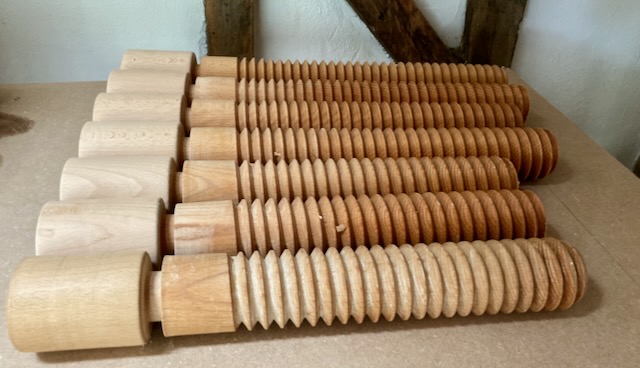
We’ve just finished up a batch of workbench vice screws. These are huge 62mm (2 1/2″) diameter screws that also work well in book presses and cider presses. They’re turned from a solid piece of beech, predrilled with a 27mm hole and come with a beech nut, garter and optional handle.

Our chairmakers’ workbenches use a vice that’s taken from a Shaker bench. It’s a great piece of old school design that uses no metal.

When the shop on the website goes live we’ll add them to it. In the meantime get in touch if you’re interested.

They’re £120 each and they come with a nut and garter.


As always, if you’re interested in coming on a course please give us a ring (07778 397328) or drop us an email.

Enjoy the autumn,

StJohn & Bryony